



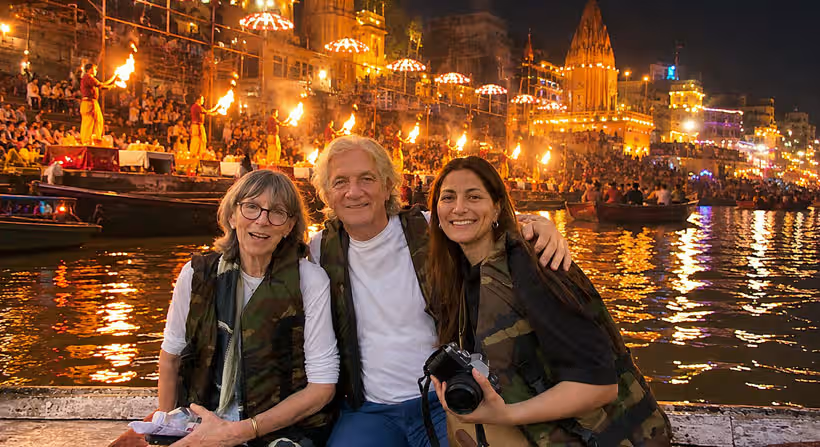
There is a moment during the evening Ganga Aarti in Varanasi when the noise around you seems to fade. The bells are still ringing. The crowd is still there. Yet your attention settles on the glowing lamps, the rising incense and the river moving quietly beyond the priests.
You do not need to understand every prayer to feel the atmosphere. For some visitors, it is a deeply spiritual experience. For others, it becomes their first real connection with the traditions of India. But before that moment comes a few practical questions. What time does the ceremony begin? Which ghat should you visit? Is watching from a boat worth it? And how early should you arrive?
This guide explains Varanasi Ganga Aarti timings, viewing options, boat prices and visitor tips, helping you plan an evening that feels meaningful rather than rushed. If you are planning your complete city visit, explore our guide to the best things to do in Varanasi for more ideas beyond the evening ceremony.
These are planning ranges, not guaranteed daily timings. Confirm the schedule locally on your visit date.
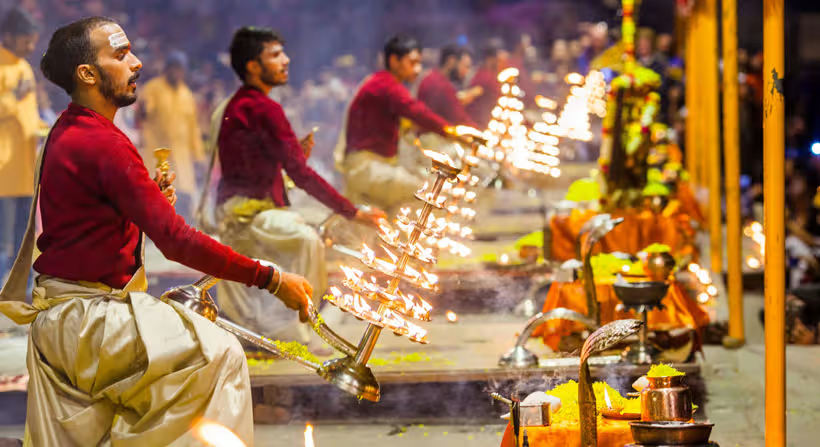
Ganga Aarti is a Hindu worship ceremony dedicated to the River Ganga, honoured as a sacred river and goddess. Priests offer prayers using incense, conch shells, bells and large brass lamps.
At Dashashwamedh Ghat, the coordinated movements create a striking scene. Lamps move through the evening air, smoke rises above the platforms, and devotional music carries across the water.
It is beautiful to watch, but it is important to remember that this is a living religious tradition, not simply a show arranged for visitors.
You may hear people call it Banaras Ganga Aarti or Kashi Ganga Aarti. These names refer to the same city, known as Varanasi, Banaras and Kashi.
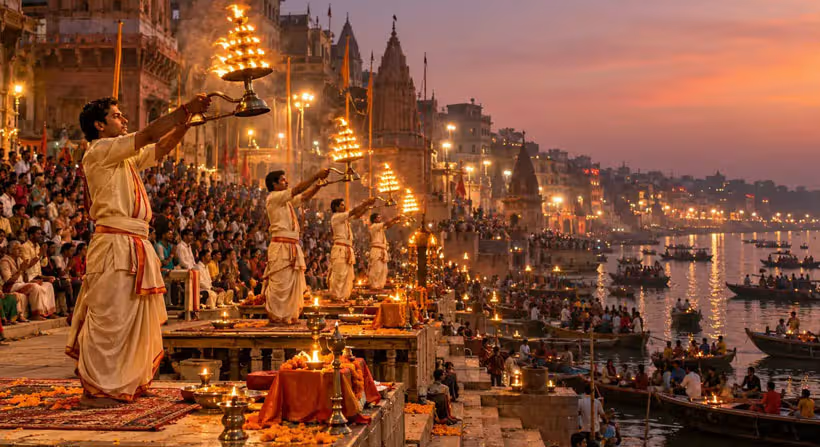
The evening ceremony takes place around sunset, so the start time changes through the year. Published guides give slightly different schedules, making same-day confirmation more useful than relying on one fixed time.
For example, some sources list 5:45 PM in winter and 6:45 PM in summer. Others suggest approximately 6:00 PM and 7:00 PM. Deep-winter evenings may begin earlier.
| Season or Experience | Approximate Start Time | What to Know |
|---|---|---|
| Winter evening aarti | 5:30 PM to 6:30 PM | Earlier sunset means an earlier evening visit. |
| Summer evening aarti | 6:45 PM to 7:15 PM | Allow time for heat, crowds and the final walk. |
| Monsoon evening aarti | Often around 6:30 PM to 7:00 PM | River conditions may affect access and boats. |
| Assi Ghat morning programme | Often around 5:00 AM to 5:30 AM | Check the current seasonal programme locally. |
Share your travel dates and interests through our enquiry form. Ask about a personalised Varanasi itinerary, private transfers and options for including the evening aarti.
Arrive early, put your phone away for a moment and let the evening unfold. Between the chanting, the river and the rising lamps, you may find that Varanasi gives you a memory you were not expecting.
Ask your hotel, local guide or the organisers at the ghat earlier that day. If you have booked a boat, confirm both the boarding time and the ceremony time. They are not necessarily the same.
A boat may leave early for a river ride before taking its viewing position. Missing the boarding time could mean missing the entire experience.
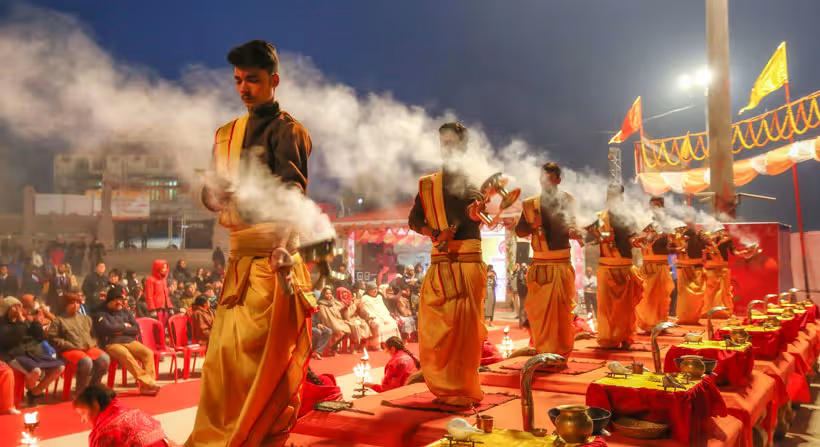
Dashashwamedh Ghat is the best-known choice for first-time visitors. This is where Morning Aarti and the you will find the familiar scene of priests holding large lamps before a crowded riverfront.
Choose it if you want the energy, scale and atmosphere associated with the main Varanasi evening aarti. Expect crowds, especially during weekends and religious occasions.
Assi Ghat is especially known for Subah-e-Banaras, its early-morning spiritual and cultural programme. It may include chanting, aarti, classical music and yoga.
It can feel calmer than the main evening gathering, although crowd levels vary. Assi also has evening worship, so confirm which experience you are arranging.
Rajendra Prasad Ghat lies beside Dashashwamedh and offers another perspective on the evening riverfront ceremonies. It may suit visitors who want to explore viewing options beyond the busiest central position.
Do not assume it will always be quiet. Check the actual crowd and sightline before settling into a place.
The steps place you inside the atmosphere. You hear the bells nearby, watch families gathering for prayers and feel the anticipation before the lamps are lit.
Public viewing is generally free, making this the simplest budget option. However, you may sit on stone, stand for a while or find your view partly blocked.
Arrive about an hour early if a clear position matters to you. Avoid blocking walking routes or pushing towards an already crowded front row.
From the river, you see the ceremony against the wider background of the ghats. The lamps reflect on the water, and the city becomes part of the scene. A boat may be a lovely choice for couples, families and photographers. However, other boats can affect the view, and boarding may involve uneven steps. For someone with limited mobility, a boat is not automatically the easier option. Ask about the actual boarding point and assistance before booking.
Some nearby businesses offer balcony views, while certain arrangements may include reserved seats or a religious ceremony package. Ask exactly what you are buying. Is it a terrace seat, a food-and-drink minimum, a guided visit or a poojan package? These are different services, not interchangeable admission tickets.
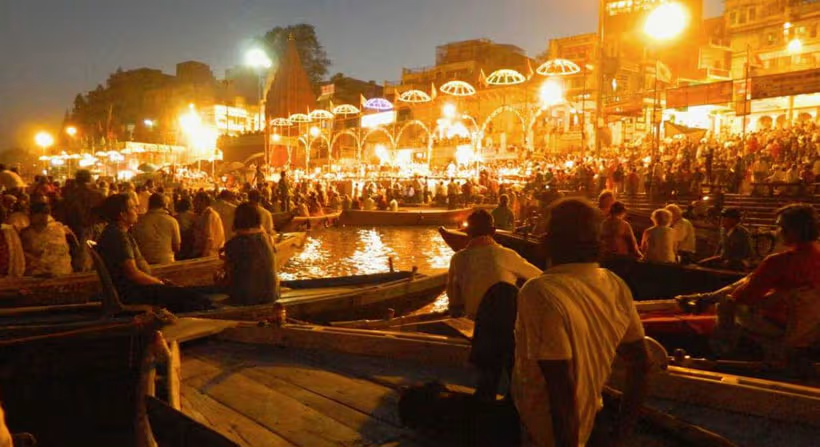
There is no single price that covers every boat experience. The total depends on the boat size, route, duration, number of passengers and whether guiding or other services are included.
For comparison, one published hotel guide suggests approximately ₹600 to ₹1,200 (about US$7 to US$13) for a short private boat experience for two to four people. A local operator advertises a longer private aarti cruise from approximately ₹3,499 (about US$39)
for up to five guests.
Before paying, confirm:
Watching from the ordinary public ghat area is generally free. Boats, arranged seating, private guiding and transport are optional paid services.
If someone offers an “aarti ticket,” ask what it actually includes. Do not confuse a service package or ritual contribution with compulsory entry to public viewing.
If you have two nights in Varanasi, leave one morning free for Assi Ghat and the river. The city feels different before the daytime rush begins.
You may see people praying, bathing, practising yoga or quietly beginning their daily routines. A sunrise boat ride adds views of temples, riverside buildings and the changing morning light.
Plan around sunrise rather than choosing the same departure time throughout the year. Ask your boat operator how the ride fits with the morning programme. The evening aarti and sunrise ride complement each other. One shows the gathering and ceremony; the other reveals everyday life along the river.
If you would like to experience both the morning riverfront and the evening ceremony without fitting everything into one busy day, explore our
Varanasi 2 Days Tour. Review the itinerary and ask which boat rides, temple visits and aarti arrangements are included for your travel dates.
Aim to reach your viewing area 45 to 60 minutes before the confirmed evening start. Allow extra time during festivals, weekends and busy holiday periods. For example, if the ceremony is confirmed for 6:00 PM, arriving near the ghat around 5:00 PM is more sensible than leaving your hotel at 5:45 PM. A little waiting is better than spending the opening prayers searching for your guide, boat or seat.
A private car helps with hotel transfers and sightseeing, but it should not be treated as a promise of vehicle access to the ceremony platforms. The final approach can involve walking through crowded lanes, depending on current traffic arrangements and your drop-off point.
For a shorter visit, our Varanasi One Day City Tour brings together riverfront experiences, temple visits and sightseeing. Discuss how the evening Ganga Aarti fits into the schedule before confirming your booking.
If you are travelling with children, older family members or anyone with limited mobility, share your walking and seating requirements in advance. Ask about the final walking distance, steps and available assistance.
Save your driver’s number and agree on a specific return meeting point. A named landmark is much easier to find than “somewhere near the ghat” after the ceremony.
October to March is generally more comfortable for sightseeing and waiting outdoors. Carry a light layer for cooler evenings or early-morning boat rides. April to June can be hot, so avoid tiring yourself with too much afternoon sightseeing before the aarti. During the monsoon, rising river levels may affect boat operations and access.
Dev Deepawali offers an especially celebrated riverfront atmosphere, with lamps illuminating the ghats. It also brings heavy demand, so organise accommodation and viewing arrangements well ahead.
Give yourself a few minutes without your camera, too. You may remember the sound of the conch and the warmth of the lamps more clearly than another photograph.
Varanasi can be a short city break or part of a longer journey through North India. Choose your route according to the time you have rather than trying to fit every famous destination into one trip.
If you have a few days available, explore our 3 Days Varanasi Tour from Delhi. Check the itinerary, compare flight or train arrangements and leave enough time to enjoy the ghats without rushing between transfers.
If you want to combine the Taj Mahal and Rajasthan’s royal heritage with the spiritual atmosphere of Varanasi, consider our Golden Triangle Tour with Varanasi. This route connects Delhi, Agra and Jaipur with time beside the Ganges.
It takes place around sunset. Published schedules range from approximately 5:30 PM to 6:30 PM in winter and 6:45 PM to 7:15 PM in summer. Confirm locally on the day.
The main evening ceremony usually lasts around 40 to 45 minutes. Allow additional time for reaching the ghat, finding your position and leaving afterwards.
Choose Dashashwamedh for the best-known large evening ceremony. Assi is particularly appealing for its morning Subah-e-Banaras programme and a different riverfront atmosphere.
Ordinary public viewing usually needs no booking. Boats and arranged seating are better confirmed ahead, particularly during busy weekends and festivals.
Yes. Visitors can observe respectfully regardless of religious background. Dress appropriately, follow local instructions and remember that the ceremony is an act of worship.
The best Ganga Aarti experience is not necessarily the most expensive seat or the closest boat. It is the one that suits your comfort, gives you enough time and lets you watch without unnecessary stress.
When planning with Private Driver India Tour, share your hotel location, travel dates, group size and preferred viewing option. Ask which transfers, guiding and boat arrangements can be included in your itinerary.
Plan Your Varanasi Experience
Planning to watch the glowing lamps beside the Ganges?
Share your travel dates, hotel location and preferred viewing option.
Ask us about a personalised Varanasi itinerary, private transfers
and available boat arrangements.
Send your travel dates, number of travellers and any walking
or seating requirements through our enquiry form or WhatsApp.
Boat availability, viewing arrangements and ceremony timings
should be confirmed for your visit date.
Private Driver India Tour, founded in 2006 by Mr. Amit Singh, is dedicated to providing unforgettable travel experiences in North India, led by professional drivers with years of expertise serving global travelers.
More About Us© Private Driver India Tour 2024-26 | All rights reserved.