




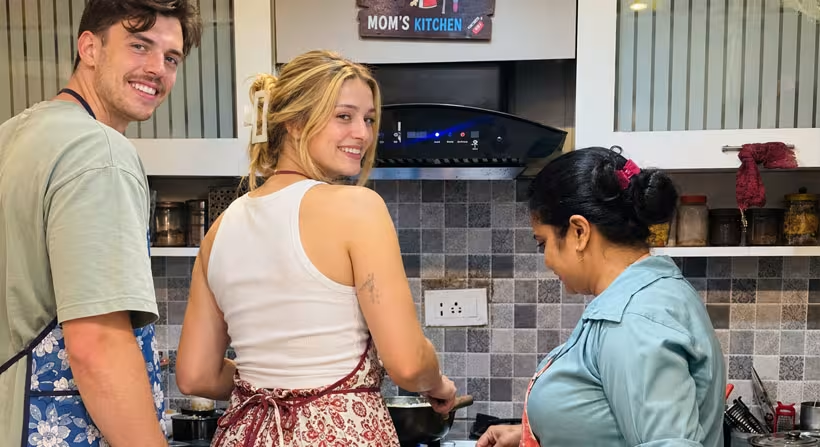
The first thing you notice may not be the food. It might be the sound of cumin touching warm oil, the smell of ginger being crushed or a host asking you to taste a sauce before adding anything else.
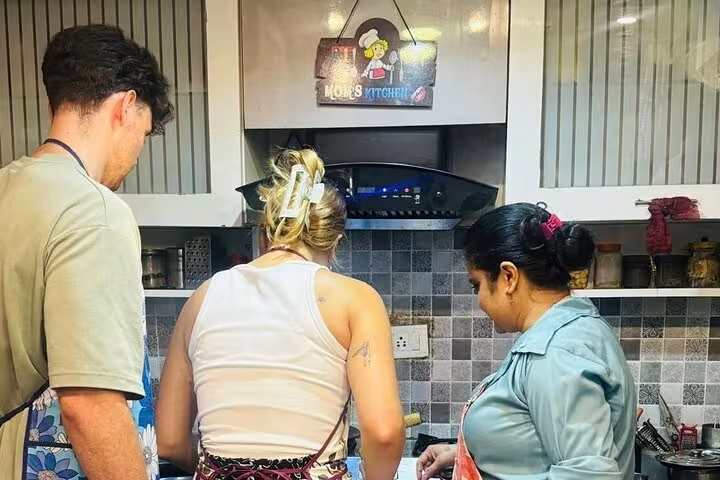
A few minutes later, you are rolling dough, comparing spices and discovering why a familiar dish tastes different in a home kitchen. Lunch is no longer just something served to you. You are helping create it.
For many travellers, an Indian cooking class becomes one of the most personal experiences of the holiday. It offers time to ask questions, learn practical skills and understand food beyond the restaurant menu.
You do not need to be an experienced cook. A good beginner-friendly class should make unfamiliar ingredients easier to understand, not leave you feeling lost.
This guide explains Indian cooking classes for foreign tourists, including where to take one, what you might learn, how much to budget and what to check before booking.
Eating a dish tells you how it tastes. Cooking it helps you understand how it comes together.
You may discover that the flavour comes from a sequence of small decisions: when the onions are ready, how the spices are heated, whether the sauce needs more cooking or why the final seasoning is added separately.
These details are often difficult to learn from a restaurant meal alone. In a class, you can stop and ask why.
There is also a human side. A host may explain how a dish changes during festivals, what their family eats on ordinary evenings or which ingredients they replace when something is out of season.
However, no single kitchen represents all Indian food. Treat the class as an introduction to a particular region, household or cooking style rather than a complete lesson in an entire country’s cuisine.
Authentic does not have to mean complicated, extremely spicy or cooked in an old-fashioned kitchen. It can mean a simple meal prepared in a way that makes sense to the person teaching it.
Indian food changes between regions, communities and homes. Even two neighbours may prepare the same dish differently.
One family may use more tomato. Another may prefer a souring ingredient, a different fat or a separate finishing technique. These variations are part of the interest.
The most useful cooking class explains those choices. Instead of telling you there is only one correct recipe, a thoughtful instructor helps you understand the result you are trying to achieve.
Ask questions such as, “Is this how your family usually makes it?” and “What would change in another season?” You may learn more from those answers than from memorising a long ingredient list.
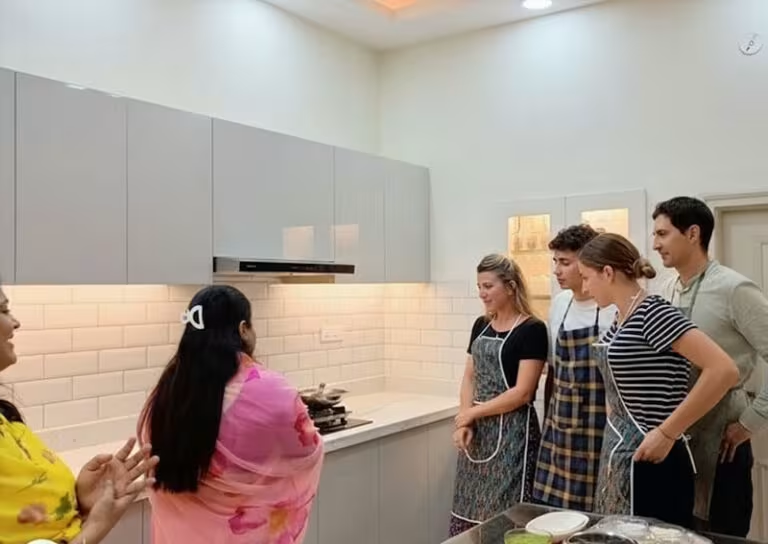
A home-based class gives you the chance to cook in a domestic setting and, where included, share a meal with the host.
It may suit travellers interested in everyday food, conversation and a smaller setting. You might work around a family counter rather than at an individual professional station.
Ask about group size, seating and the amount of participation. Being invited into a home does not automatically mean you will prepare every dish yourself.
Also remember that a home is someone’s private space. Follow your host’s guidance about shoes, photography and which rooms are open to guests.
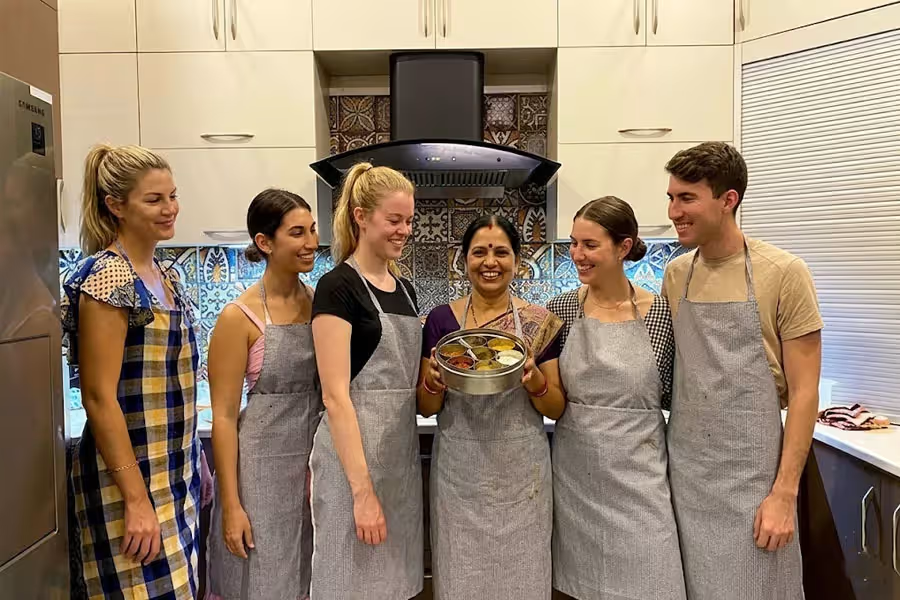
A cooking studio may offer a more structured environment, with planned workstations, equipment and clearly divided cooking tasks.
This can be useful for travellers who want detailed instruction or a group activity where everyone has a defined role.
Ask whether the class has individual stations or shared preparation areas. A professional venue can still run a demonstration rather than a fully hands-on workshop.
Some travellers prefer a class within a hotel because it fits easily around their stay. These sessions may focus on a regional menu, restaurant techniques or selected signature dishes.
Check the format carefully. A chef-led event might involve watching several preparations and helping with only one part of the meal.
A market-to-table class combines ingredient shopping with cooking. It can help you connect vegetables, herbs and spices with the finished meal.
However, a market visit adds walking and travel time. Confirm the total duration and whether it is mainly an educational walk or includes time to purchase ingredients.
You do not always need a full cooking session. A shorter workshop focused on masala chai, bread or another specific preparation can suit a busy itinerary.
This is worth considering if you are curious about cooking but do not want to spend half a day in the kitchen.
These are different experiences, and neither is automatically better. The right choice depends on how involved you want to be.
In a hands-on class, you should take part in meaningful preparation, such as mixing, chopping, shaping, cooking or seasoning. In a demonstration, the instructor does most of the work while explaining the process.
A demonstration may suit someone who wants to learn while seated or avoid handling hot equipment. A hands-on session is usually more appealing if your goal is to repeat the dishes at home.
Ask a direct question before booking: “Which parts of the meal will each guest prepare?” The answer tells you more than a promotional phrase such as “interactive experience.”
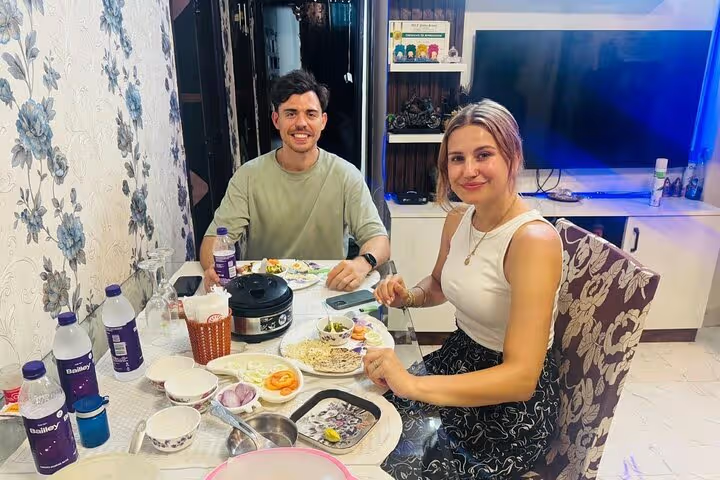
Delhi has home-based classes and organised cooking studios, including sessions taught in English. It can be a convenient choice at the start or end of a North India trip.
Menus may include lentils, vegetables, flatbreads, paneer dishes or meat preparations, depending on the host and class.
Choose a menu that teaches you something you genuinely want to cook. A smaller meal with clear explanations may be more useful than an impressive list of dishes prepared mostly in advance.
If you also want to explore the city’s streets and history, consider a separate Old Delhi heritage walk with a rickshaw ride. A heritage walk and a cooking class provide different experiences, so check the inclusions of each.
Jaipur offers family-hosted cooking sessions and vegetarian experiences that can fit naturally into a Rajasthan holiday.
A class may introduce dishes such as dal, vegetable preparations, chapati or other items selected by the host. Some experiences place greater emphasis on Rajasthani food, while others teach a broader North Indian menu.
Do not assume a class includes dal baati churma simply because it takes place in Rajasthan. Confirm the actual menu before booking.
If you are following the Golden Triangle route, a Jaipur class can provide a change of pace between monuments, forts and city sightseeing.
Udaipur can be a good setting for a cooking class when you have a slower afternoon available. Listed experiences include home-style and regional cooking sessions.
You could plan a morning palace visit, return to your hotel and attend a late-afternoon class that finishes with dinner.
Avoid arriving directly from a long road transfer with no time to settle. Cooking is more enjoyable when you are not checking the clock or worrying about another appointment.
A Kerala cooking session can introduce a different set of flavours and preparations from the meals you may have tried in Delhi or Rajasthan.
Depending on the instructor, you may learn about coconut, curry leaves, rice-based dishes, vegetables or seafood. Menus vary, and a Kerala class is not automatically vegetarian.
Ask whether the lesson focuses on everyday family food, a regional meal or a selection of dishes chosen for visitors.
If you are budgeting for several activities, our South India travel cost guide can help you think about how experiences fit into the wider holiday.
Cooking experiences are also available in other cities, including Chennai. Some introduce selected South Indian dishes, while others focus on a host’s family recipes.
If a class includes idli or dosa, ask which preparation stages you will see. A short session may use batter prepared earlier because the full process takes longer than the lesson.
That is not necessarily a problem, provided the instructor explains the missing stages and gives you the information needed to repeat the recipe.
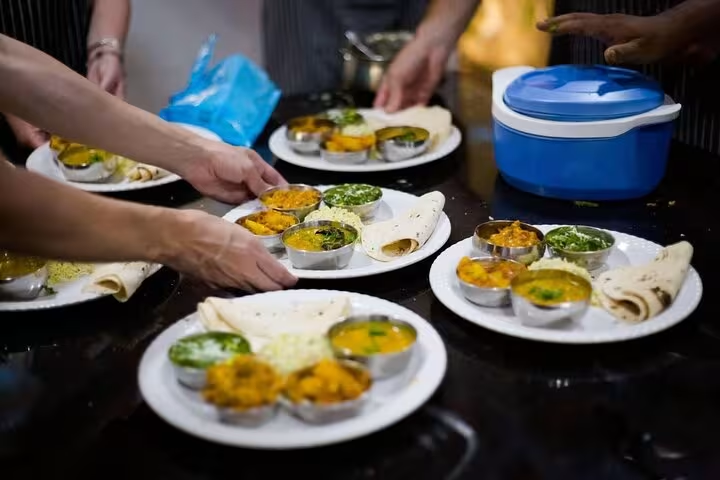
A useful class introduces ingredients before they disappear into the pan. Ask to see the lentils, spices, herbs and flour in their uncooked form.
Write down names you recognise as well as local names. This makes shopping easier when you return home.
You do not need to memorise every ingredient. Focus on the ones used in your menu and ask how they affect flavour, texture or cooking time.
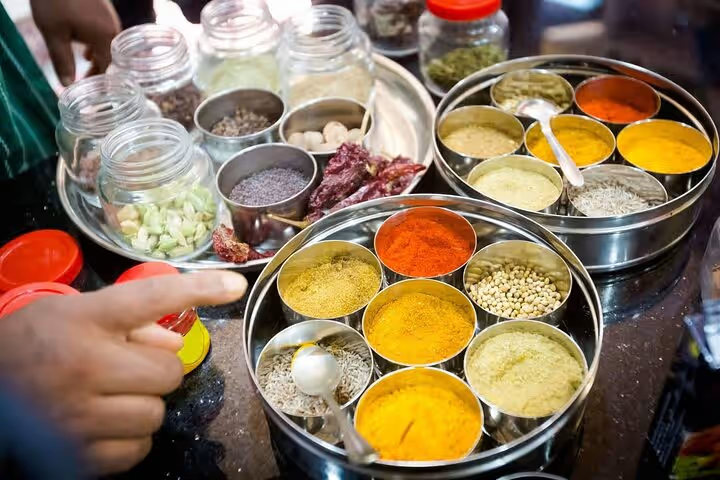
One of the most valuable lessons is understanding when spices are added, not simply which spices appear in a recipe.
You may observe whole spices being heated in oil, powdered spices being added to a cooking base or a finishing mixture being prepared separately.
Ask the instructor to explain the smell, colour and sound you should notice. These cues can be more helpful than an instruction to cook something for an exact number of minutes on unfamiliar equipment.
Many classes teach a cooking base involving ingredients such as onions, ginger, garlic or tomatoes. The combination and method depend on the dish.
Ask what the mixture should look like before the next ingredient goes in. Learning that stage can make a greater difference than buying another spice blend.
Also ask which dishes do not use that base. It is easy to leave one class thinking every Indian meal begins the same way.
Rolling a chapati can be one of the most enjoyable parts of a beginner class. The first attempt may be uneven, but you learn through touch as well as instructions.
Notice the dough texture, resting time and rolling technique. Ask how the instructor adjusts for a different brand of flour.
If you want to learn naan, check that it is actually included and ask which equipment is used. Do not assume every class has a tandoor.
A good lesson helps you understand what to do when a dish tastes unfinished. The answer is not always more chilli.
The instructor may discuss salt, acidity, cooking time, texture or balance. Ask them to explain the decision rather than quietly correcting the food for you.
Those conversations turn a single recipe into a skill you can use again.
The following are examples, not a promised menu. Your class should confirm its dishes in advance.
Non-vegetarian sessions may teach chicken, fish or another agreed preparation. Confirm whether meat handling is part of the class and whether vegetarian participants share the same work area.
A class teaching four dishes thoroughly can be more useful than one advertising ten dishes where guests only complete small finishing steps.
Every host works differently, but this example shows how a session might be organised.
| Stage | What You Might Do |
|---|---|
| Welcome and introduction | Meet the host, review the menu and confirm dietary requirements. |
| Ingredient discussion | Learn about the spices, vegetables and other ingredients. |
| Hands-on preparation | Prepare selected dishes with the instructor’s help. |
| Tasting and finishing | Discuss flavour, texture and adjustments. |
| Shared meal and questions | Eat the meal and clarify recipes or ingredient substitutions. |
A market visit may extend the experience. Ask whether the advertised duration includes shopping, transport and the meal, or only the kitchen session.
Prices depend on location, group size, menu, venue and inclusions. A shared home class, private studio session and hotel workshop are not directly comparable products.
At the time of research, selected booking listings showed a Jaipur class from about US$20, a Kerala class from about US$35, and Delhi sessions around US$57 to US$61 per adult. Another listed Jaipur market-to-table experience at US$55.
These are advertised examples, not fixed rates or a complete market survey. Check the final price for your date, including taxes, booking fees and any minimum participant requirement.
| Example Experience | USD | Approximate INR |
|---|---|---|
| Selected Jaipur cooking class | From US$20 | Approximately ₹1,780 |
| Selected Kerala cooking class | From US$35 | Approximately ₹3,115 |
| Selected Jaipur market-to-table experience | From US$55 | Approximately ₹4,895 |
| Selected Delhi cooking sessions | Around US$57 to US$61 | Approximately ₹5,073 to ₹5,429 |
INR conversions use an illustrative rate of ₹89 = US$1, not a live exchange rate. These examples are not quotations from Private Driver India Tour.
Ask whether ingredients, instruction, the shared meal, drinking water and recipes are included. Some sessions also include transfers or a market visit, but these should be stated clearly.
Check whether the amount is per person or for a private group. A private minimum charge can make a small booking more expensive than the headline price suggests.
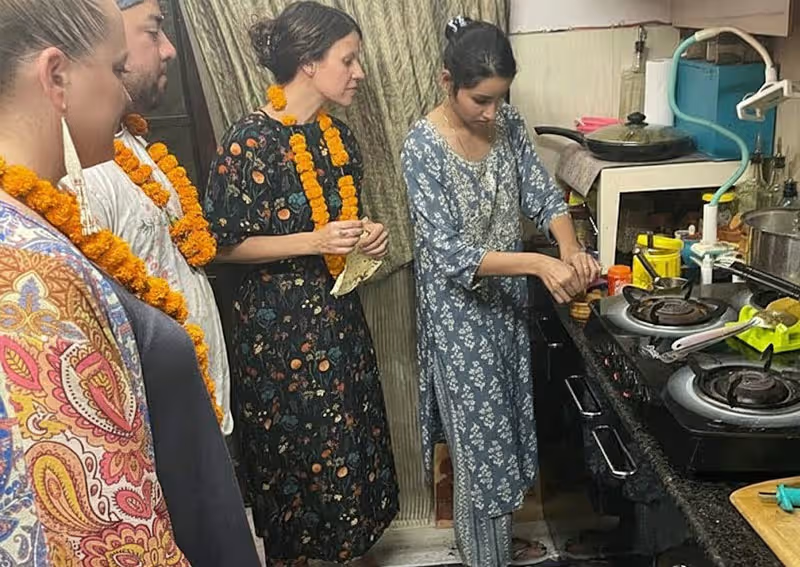
A shared class can be enjoyable if you like meeting other travellers and do not mind following a fixed menu. It may also be easier to join without arranging an entire private session.
A private class gives you more room to discuss the menu, pace and questions in advance. This can be helpful for families, food enthusiasts or travellers with specific interests.
However, private does not mean every request is possible. A small home kitchen may still have limits on equipment, ingredient handling or menu changes.
Ask how many people share each workstation. A group of eight with useful individual tasks may feel more hands-on than a group of four watching one person cook.
Vegetarian sessions are widely represented in tourist cooking listings. They can be a good introduction to lentils, vegetables, breads and other preparations without making meat the centre of the lesson.
Vegan options are also available from some providers, usually with advance notice. Do not assume a vegetarian menu is automatically vegan.
Ask specifically about dairy ingredients such as milk, yoghurt, cream, butter, ghee and paneer. Explain whether you want ingredient substitutions or a menu built around dishes that already suit your diet.
The same principle applies to other dietary preferences. Clear information before booking gives the instructor time to decide what they can realistically offer.
If you have a food allergy, describe the exact ingredient and the seriousness of the reaction before paying. Ask how the kitchen prevents cross-contact through utensils, preparation areas, storage and shared ingredients.
A dish made without an ingredient is not automatically suitable for someone who must avoid traces of it.
For gluten-free requirements, discuss flour handling and shared equipment as well as the recipe itself. A kitchen preparing wheat breads may not be able to meet your needs.
Request written confirmation of what the host can and cannot accommodate. If the answer is unclear, choose a different experience rather than relying on reassurance alone.
Follow your clinician’s advice about emergency medication and travel preparation. A cooking host should not be expected to provide medical advice or guarantee that a shared kitchen is risk-free.
A welcoming kitchen should also follow sensible food-handling practices. The World Health Organization’s core principles include keeping clean, separating raw and cooked foods, cooking thoroughly, maintaining safe temperatures and using safe water and ingredients.
For visitors, useful questions include whether there is a handwashing area, how drinking water is provided and how raw ingredients are kept separate from ready-to-eat food.
If meat or seafood is included, pay attention to separate preparation equipment and proper handling. Do not judge hygiene only by whether the kitchen looks modern or traditional.
Clean routines matter more than decorative surroundings. A professional-looking room does not remove the need for careful food preparation.
Some classes welcome children, but age limits and suitable tasks vary. Ask before booking rather than arriving with a child who cannot safely participate.
Younger guests may enjoy mixing, shaping dough or arranging ingredients under supervision. Hot pans, knives and crowded work areas require a different level of care.
Confirm whether the instructor provides child-friendly tasks, how long children are expected to stand and whether a shorter session is available.
For a family holiday, one or two enjoyable cooking tasks may be more valuable than a long class designed mainly for adults.
Many tourist-focused classes advertise English instruction, but teaching style matters as much as language. Ask whether the instructor explains each step and welcomes questions.
If hearing, vision or mobility requirements affect your participation, describe them before booking. Check stairs, seating, worktop height, restroom access and the amount of standing.
Do not assume “private class” means fully accessible. A host needs accurate information to tell you whether the space and format are suitable.
A clear conversation beforehand can prevent an uncomfortable experience for both the visitor and the instructor.
Look beyond the overall rating. Recent reviews may explain whether guests actually cooked, whether recipes were provided and whether the host answered questions clearly.
Comments about group size, transport and the meal can help you understand what the advertised experience feels like in practice.
Think about what you can buy and cook at home. A practical dal, vegetable dish and bread lesson may be more useful than a complicated menu requiring equipment you do not own.
Ask when to arrive, when the meal is served and when you should expect to leave. A “three-hour class” may have a different meaning when transfers or a market visit are added.
Read the cancellation deadline, minimum participant requirement and policy for menu changes. Save the booking details and contact number before travelling.
The answers should help you choose confidently. If the provider cannot describe the format or inclusions clearly, keep looking.
A cooking class works best when it replaces another activity rather than being squeezed into a full sightseeing day.
For example, visit one major attraction in the morning, take a break and attend a class that finishes with lunch or dinner. This creates a comfortable rhythm and avoids paying for a meal you do not have time to enjoy.
On a Golden Triangle trip, choose Delhi or Jaipur according to your hotel locations and free time. You do not need a cooking class in every city.
For a broader route, compare the timing with our 3 days Golden Triangle tour and ask whether a suitable food experience can be considered for your dates.
During a Rajasthan holiday, a quieter afternoon in Jaipur or Udaipur may be more suitable than the day you arrive after a long transfer.
For South India, think about the regional food you want to explore and whether the class fits comfortably around hill-station drives, temple visits or a houseboat stay.
A class address may be in a residential neighbourhood rather than near the main tourist sights. Confirm the exact location and meeting instructions.
If you are using a private driver, share the address and expected finish time in advance. Ask whether the vehicle can reach the entrance or whether a short walk is necessary.
Allow extra time in busy cities. Starting late can shorten the lesson or affect the host’s other commitments.
If communication is a concern, our travel enquiry form lets you explain your route, transport needs and interest in a cooking experience. Availability and arrangements should be confirmed separately.
Wear comfortable clothing that allows you to move easily. Avoid loose sleeves near heat, tie back long hair and follow the host’s guidance about footwear.
Bring your booking confirmation, a working contact number and any written dietary information. A small notebook can help, although some hosts provide recipes.
Ask before filming or taking photographs, particularly in a family home. The kitchen may be part of the experience, but not every person or room is automatically available for pictures.
You usually do not need to carry cooking tools unless specifically requested. Confirm whether aprons and other materials are provided.
Before leaving, ask the instructor which dish is easiest to repeat first. Start with that recipe rather than trying to recreate the entire class meal in one evening.
Check the measurements and serving sizes. A household spoon is not always the same as a standard measuring spoon, and a recipe for a large group may need careful adjustment.
Ask about ingredient substitutions available in your country. It is better to understand a reasonable alternative than buy something only because the packaging looks similar.
If you want to take spices home, check your destination country’s customs and biosecurity rules. Do not assume all food products can cross borders without restrictions.
You may not reproduce the meal exactly the first time. That is normal. The most valuable souvenir is often the confidence to try again and understand what to change.
More dishes do not always mean more learning. Ask how much preparation is completed before guests arrive and which tasks you will do yourself.
A host may have purchased ingredients and prepared the kitchen before you arrive. Share requirements early so they can tell you honestly whether the class is suitable.
A delayed train, flight or road transfer can create unnecessary stress. Choose a day with enough flexibility to arrive rested and on time.
Home cooking may be simpler and different from the dishes you know from restaurants abroad. That difference can be the most interesting part of the class.
Be curious and respectful. Ask before photographing, follow the host’s instructions and allow conversation to develop naturally rather than expecting a staged experience.
Many tourist-focused classes are designed for beginners. Confirm that the instructor explains each step and that the menu matches your experience level.
Many sessions last around two to four hours, including the meal. Short workshops may be briefer, while market visits and transfers can extend the experience.
Yes, many visitor-focused listings offer English instruction. Confirm the teaching language with the actual provider rather than assuming every class uses English.
Vegetarian classes are common in tourist listings, and some providers offer vegan menus on request. Confirm ingredients and substitutions before booking.
Many experiences include a meal, but check the details. Ask whether you eat the dishes you prepared, additional food made by the host or a combination of both.
Some providers can accommodate certain requirements with notice, but this depends on the kitchen and menu. Discuss cross-contact and obtain a clear answer before paying.
Some classes provide printed or digital recipes, while others do not. Ask whether measurements, ingredient names and cooking instructions are included.
A private class may allow more discussion and flexibility. A shared class may suit travellers who enjoy meeting others. Compare the format and participation, not only the label.
Some classes welcome children, but age limits and suitable tasks vary. Check supervision, session length and kitchen safety before booking.
Not always. Transfers may be included, optional or unavailable. Confirm the pickup area, timing and total cost separately from the class fee.
A cooking class can change the way you remember a place. A dish becomes connected to a conversation, a kitchen and a small moment when something unfamiliar begins to make sense.
You may forget the exact order of a busy sightseeing day, but remember the host who helped rescue your uneven bread or explained why the sauce needed a little more time.
Choose a class that suits your interests, ask practical questions and arrive ready to participate. You do not need to become an expert in one afternoon.
Learning a few useful techniques, understanding a meal more deeply and sharing it with others can be enough.

About the Author
Amit Singh is a travel professional who plans personalised India tours for international travellers. His work includes Golden Triangle, Rajasthan and North India journeys, with private drivers, hotel arrangements and flexible itineraries.
In this guide, he brings a travel-planning perspective to Indian cooking classes, helping visitors understand class formats, booking questions and how a food experience can fit into their holiday.
Private Driver India Tour, founded in 2006 by Mr. Amit Singh, is dedicated to providing unforgettable travel experiences in North India, led by professional drivers with years of expertise serving global travelers.
More About Us© Private Driver India Tour 2024-26 | All rights reserved.