



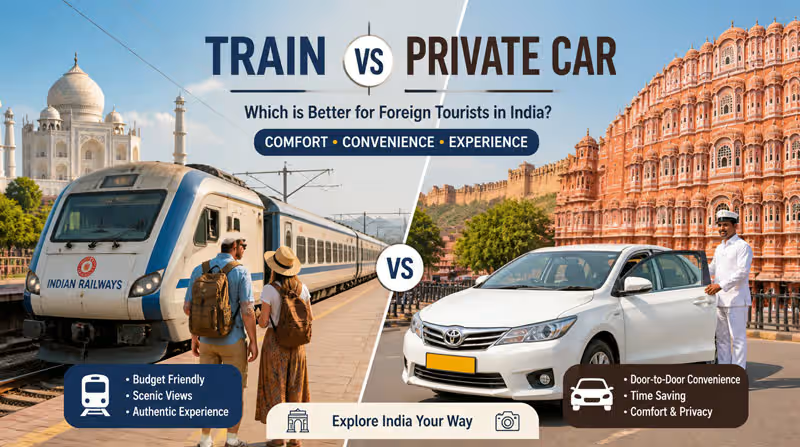
India is an incredible country to explore, with buzzing cities, ancient forts, colourful markets, peaceful villages, jungles, beaches and mountains all packed into one vast landscape. For foreign tourists, one of the most important practical decisions is simple but powerful: Should you travel by train, or hire a private car with driver?
Both options offer very different ways of experiencing India. Trains connect thousands of towns and cities and give you a front-row seat to everyday Indian life, from chai sellers to families on the move. A private car with a professional driver, on the other hand, offers door-to-door comfort, safety, privacy and complete flexibility, which is especially valuable for first-time visitors, families, couples and senior travellers.
This guide explains the pros and cons of train vs private car in India so you can choose the best option for your itinerary, comfort level, budget and travel style. Whether you are planning the Golden Triangle (Delhi–Agra–Jaipur), a Rajasthan circuit, Kerala backwaters and hill stations, or Himalayan towns, understanding these differences will help you travel with confidence.
| Factor | Train in India | Private Car with Driver |
|---|---|---|
| Comfort | Varies by class; AC classes comfortable, lower classes crowded. | Consistently comfortable, air-conditioned, private space. |
| Safety | Safe in AC coaches, but stations and crowds can feel chaotic. | Door-to-door, controlled environment, safer feel for many visitors. |
| Flexibility | Fixed routes and schedules, hard to change last minute. | Full flexibility on timing, route and stops. |
| Cultural experience | Very high: local life, vendors, families, landscapes. | Curated: conversations with driver, selected local stops. |
| Cost | Usually cheaper, especially for long routes. | Higher daily cost, but strong value for multi-stop trips. |
| Luggage | You carry it through stations and into coaches. | Stays safely in the car; driver assists. |
| Time efficiency | Great for overnight long distances; potential delays. | Best for short and medium routes; predictable timings. |
| Emotional comfort | Exciting but can be overwhelming for first-timers. | Calm, supported, less stressful overall. |
Many foreign travellers end up using both: trains for long overnight sectors and a private car for regional sightseeing and city-to-city travel.
A private car with driver offers a controlled, air-conditioned environment where you can simply sit back and relax. Seats are clean and spacious, the temperature can be adjusted to your liking, and you are free to rest, sleep, chat, or quietly enjoy the scenery. Your luggage remains with you in the vehicle, and the driver handles everything related to navigation, tolls, parking and traffic.
This level of comfort is especially valuable in India because of the mix of hot weather, variable road conditions, and long sightseeing days that can otherwise become physically tiring. Many foreign tourists prefer private cars simply because they avoid the crowds, noise and heat that can be common in trains and stations during busy seasons.
Train comfort depends strongly on the class you choose. AC First Class and AC Two Tier coaches typically provide decent comfort with bunks, bedding and relatively quiet surroundings, making them suitable for long-distance and overnight travel. However, Sleeper Class and General Class are often very crowded, noisy and hot, and are usually not recommended for most foreign tourists seeking comfort and rest.
Even in AC classes, short journeys can feel tiring due to frequent stops, passenger movement, and the effort of navigating crowded platforms at both ends of the journey. If you are sensitive to noise, crowds or sudden schedule changes, a train journey can sometimes feel more exhausting than expected.
With a private car and professional driver, your travel happens in a relatively controlled space from hotel door to hotel door. You do not need to manage busy station areas, negotiate with unknown taxi drivers, or move with heavy bags through crowds.
Drivers can assist you with hotel check-ins, suggest safe food stops, guide you through busy markets and tourist sites, and advise what to avoid. Many solo female travellers and families with children feel particularly reassured by having one trusted driver throughout their trip, especially during evenings or early-morning transfers.
Indian Railways is generally safe, especially if you book AC classes. However, the environment around train travel can feel hectic: crowded platforms, rush at train doors, porters trying to get your attention, and occasional pickpocket risks in busy stations.
Solo travellers, especially women, may feel uncomfortable in certain situations such as late-night arrivals, mixed-gender compartments in lower classes or chaotic station exits. Trains are safe enough for confident, aware travellers, but they require a higher level of personal vigilance compared to travelling in a private car.
A private car is the clear winner when it comes to flexibility and spontaneity. You can start your day when you want, adjust the route, stop for photographs, visit a village or craft centre you discover on the way, extend your time at a monument, or shorten the day if you feel tired.
This makes private cars ideal for:
This level of personalised control is simply not possible with trains.
Trains run on fixed routes and fixed timetables. If you miss a train, you need a new ticket, and during busy seasons or holidays, this can be difficult or expensive to arrange at the last minute.
You also cannot stop the train for a scenic view or to explore an interesting village you spot outside the window. Trains work well if your itinerary is structured and you are committed to specific dates and times, but they do not offer much room for spontaneous changes.
Train journeys can be one of the most authentic ways to experience Indian life. On platforms and in coaches, you will see families travelling together, students with backpacks, vendors selling chai and snacks, and people from different states speaking multiple languages.
From the window, you can watch villages, farms, rivers and small towns roll by, giving you a cinematic sense of the country’s scale and diversity. For culturally curious and adventurous travellers, this exposure is often one of the most memorable parts of their trip.
Travelling in a private car is quieter and more private, so you will have fewer spontaneous interactions with large groups of locals. However, a good driver can act as your bridge to local culture by explaining traditions, telling stories, suggesting temples, viewpoints, village markets and local restaurants, and helping you navigate cultural differences.
This gives you a more curated and filtered cultural experience: still authentic, but with more comfort and guidance.
Trains are generally the more budget-friendly option, especially over long distances. AC classes are moderately priced compared to the comfort they offer, and using an overnight train can save you one night of hotel costs. For backpackers or long-term travellers, this can make a noticeable difference to the total budget.
Hiring a private car with driver has a higher daily cost, but you receive full-day usage, door-to-door transfers, sightseeing, luggage support and significant time savings. On complex multi-city routes like Delhi–Agra–Jaipur, Jaipur–Jodhpur–Jaisalmer–Udaipur or Kochi–Munnar–Thekkady–Kumarakom, a private car often provides better overall value than combining multiple taxis, local autos and train tickets, which can become logistically tiring.
For foreign tourists with limited time, the extra cost frequently pays off in terms of comfort, safety and reduced stress.
If you are travelling with big suitcases, camera gear, children’s bags or souvenirs, a private car is the most convenient option. The driver loads and unloads the luggage, it stays locked inside the vehicle during stops, and you never need to carry it up and down station stairs or across long platforms.
This is especially helpful for families, senior travellers and photographers with heavy equipment.
On trains, you must manage your luggage yourself – lifting bags into overhead racks or sliding them under seats and berths. Platforms can be crowded, and you may need to walk across bridges or ramps with all your belongings.
While perfectly manageable for fit, light-packing travellers, this can feel overwhelming for those with large bags, mobility concerns or children.
On many short and medium-distance routes, a private car is actually faster door-to-door than a train, because you avoid reporting early to the station, waiting for boarding, and then finding onward transport at the destination.
Examples where a private car often wins on time and comfort:
You leave straight from your hotel and arrive directly at your next hotel or monument without intermediate stops.
For long distances, especially overnight journeys, trains can be very efficient. You travel while sleeping and wake up in a new city, effectively combining transport and accommodation.
Typical overnight sectors include:
However, trains can face delays due to weather or congestion, while a private car, although affected by traffic, usually offers more predictable timing for short and medium routes.
From an environmental perspective, trains consume less fuel per passenger and therefore are more eco-efficient for long distances. Private cars naturally have higher emissions, especially when carrying only one or two travellers.
If you are environmentally conscious but still want comfort, one balanced approach is to use trains for longer sectors and then hire a fuel-efficient car locally for sightseeing, while avoiding unnecessary detours.
Most first-time foreign visitors to India feel more relaxed with a private car and driver. It removes the stress of reading timetables, working out platforms, dealing with station crowds, and negotiating local transport at each step.
Bes advantages of a private car for first-timers:
Train travel is a fantastic experience, but it is often better suited to adventurous travellers or repeat visitors who already feel comfortable navigating India’s public systems.
Trains work particularly well for:
If you enjoy public transport, meeting locals and adapting to a bit of chaos, trains can become a highlight of your trip.
A private car is usually the best option for:
Beyond logistics, many foreigners value the emotional comfort of having the same driver throughout their journey – someone who becomes a familiar face, helps in unfamiliar situations, and quietly looks after them on the road.
Female travellers often report feeling safer and more relaxed in a chauffeur-driven private car. Reasons include:
Many women later say that having a private driver made their India trip feel peaceful and secure, allowing them to enjoy the country without constant logistical worries.
Yes – and for many travellers, this is the ideal approach. You can:
This way, you enjoy the cultural charm of train travel while still benefiting from the comfort, safety and flexibility of a private car for day-to-day exploration.
Yes, train travel in AC classes is generally safe, but platforms and station areas can feel crowded and chaotic, so you should stay alert and keep valuables secure.
For most foreign tourists – especially first-timers, families, seniors and couples – the added comfort, safety, flexibility and luggage support make a private car very good value for money.
A private car with driver is usually better for the Golden Triangle because it offers door-to-door travel, flexible sightseeing stops and smoother timing between Delhi, Agra and Jaipur.
Overnight trains on major routes can be a smart way to cover long distances while saving on a hotel night, provided you are comfortable with basic shared spaces and minor schedule variations.
Yes, you should book Indian train tickets in advance, especially for popular routes and AC classes, as last-minute availability can be limited during peak seasons and holidays.
Absolutely. A private car offers gentle boarding, direct hotel access, climate control, regular rest stops and luggage assistance, making travel far more comfortable for senior travellers.
Many solo female travellers do use trains safely, particularly in AC classes, but they often prefer private cars for night transfers and for the overall feeling of security and predictability.
Trains provide more raw, everyday cultural exposure, while private cars provide curated cultural insights through your driver and personalised stops. The better experience depends on your comfort level.
Yes, many travellers take trains for long-distance routes and then hire a private car with driver for local touring and regional circuits, combining the strengths of both options.
For a short first-time visit focusing on classic routes like the Golden Triangle or Rajasthan highlights, a private car with driver is usually the most efficient and stress-free option.
Private Driver India Tour, founded in 2006 by Mr. Amit Singh, is dedicated to providing unforgettable travel experiences in North India, led by professional drivers with years of expertise serving global travelers.
More About Us© Private Driver India Tour 2024-26 | All rights reserved.