



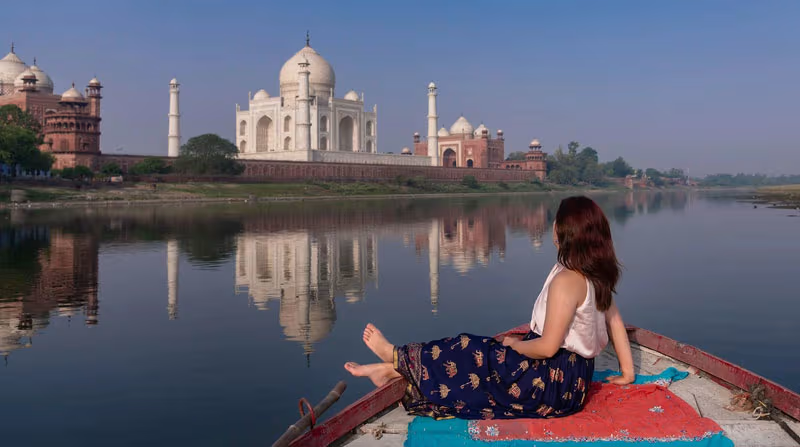
Should women travel alone in India? When you travel across India as a solo female traveler, keep in mind that India is predominantly conservative in many parts, and there are a few things you need to know before you go. The good news is that solo female travel in India is absolutely possible, deeply rewarding, and done by thousands of women every year. With the right preparation, the right mindset, and this guide, you will be ready for an incredible journey.
Should women travel alone in India? It is one of the most asked questions among solo female travelers planning their first trip to the country. The honest answer is — yes, absolutely. But like any destination, it requires some preparation, awareness, and the right mindset.
India is an extraordinary place. The colors, the culture, the history, the food, and the warmth of the people make it one of the most rewarding travel experiences in the world. Thousands of women travel through India solo every year and come back with memories that last a lifetime. The key is knowing what to expect and how to navigate situations smartly.
Yes — and many do, every single day. Solo female travel in India is entirely possible and deeply rewarding. That said, it is important to go in with your eyes open. India is a large, diverse country and experiences vary enormously depending on where you go, how you dress, and how you carry yourself.
Socially, India remains conservative in many parts, particularly in smaller towns and rural areas. As a solo woman traveler, and especially as a foreign woman, you may attract more attention than you are used to back home. This can range from curious stares to unsolicited comments. It is rarely dangerous, but it can be tiring if you are not prepared for it.
The good news is that with some basic preparation and awareness, solo female travel in India is very manageable. Millions of women do it every year. The more you know before you go, the more confidently and enjoyably you will travel.
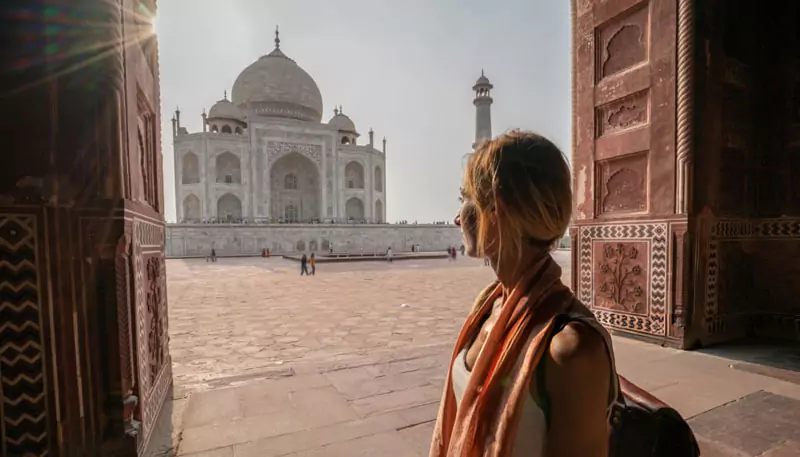
What you wear in India genuinely matters not because you need to conform, but because dressing modestly significantly reduces the amount of unwanted attention you receive. The goal is simple: blend in with the local women as much as you comfortably can.
| Avoid | Recommended |
|---|---|
| Plunging necklines | Loose long pants or trousers |
| Shorts and miniskirts | Long skirts and maxi dresses |
| Tank tops and sleeveless tops | Loose shirts and light cotton tops |
| Tight, body-hugging clothes | Salwar kameez (local tunic and trousers) |
The salwar kameez — a loose tunic worn with baggy trousers and a dupatta scarf — is one of the best things you can wear in India, especially in smaller towns and rural areas. It is comfortable in the heat, culturally respectful, and widely available to buy cheaply once you arrive. Many seasoned female travelers to India pick one up within their first day.
In more cosmopolitan areas like Mumbai, Delhi, Goa, and Bangalore, you will see local women in a wider range of styles. But even here, modest dress in temples, mosques, and religious sites is always expected for everyone.
This is something that surprises many first-time visitors. Unlike beach destinations in Europe or Southeast Asia, India generally does not have a strong beach bathing culture. Most local women do not swim in swimsuits, and wearing a bikini on most Indian beaches will attract significant attention.
In tourist-heavy spots like certain beaches in Goa, you will see more international travelers and a slightly more relaxed atmosphere. But even there, being aware of your surroundings matters.
Practical advice: Wear a large T-shirt and knee-length shorts or tights over your swimwear when on the beach. Only swim where other tourists are already present, and avoid isolated beaches entirely when traveling alone. Never go to a secluded beach by yourself.
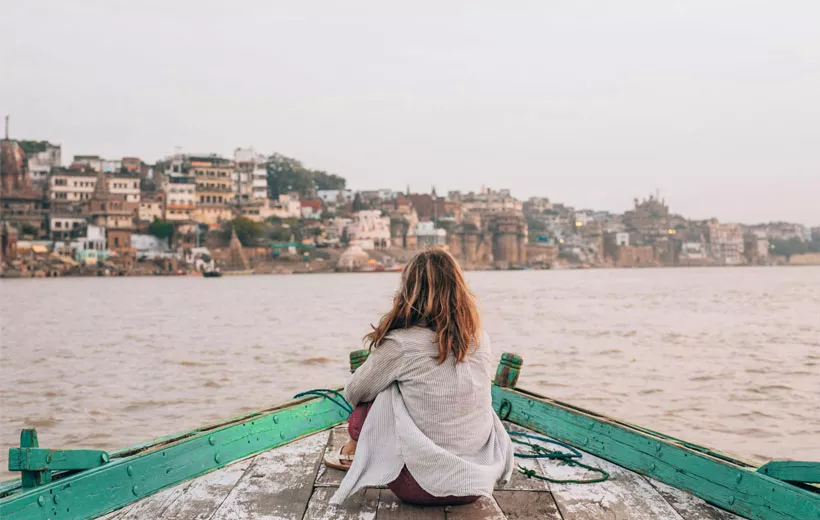
Getting around safely is one of the most important parts of planning a solo trip as a woman. India has a range of transport options, and each comes with its own safety considerations. Here is what you need to know for each one.
Trains are one of the best ways to cover long distances in India, and with the right booking choices they are very safe for solo women.
Always book a reserved compartment, never travel in an unreserved general coach.
Choose Three-Tier AC (3AC) class. It is comfortable, affordable, and has a good mix of travelers.
Book the upper berth, where possible it gives you more privacy and is harder for strangers to access.
Use the Ladies Compartment when available on local and suburban trains.
Use the Ladies Queue at booking counters to avoid crowding.
Buses are widely used across India, but not all of them are equally safe or comfortable for solo women.
Avoid double-sleeper buses that do not have separate sections for men and women the arrangement can be uncomfortable and unsafe.
Book seats that are specifically reserved for women where available.
Government-run buses on popular tourist routes are generally more reliable and safer than private operators.
For overnight travel, trains are a safer and more comfortable option than buses for solo women.
For shorter distances within cities, app-based cabs are the safest and most convenient option for solo female travelers.
Use Uber or Ola both apps show driver details, car registration, and share trip tracking features.
Share your trip details with someone you trust before getting in.
Make sure no one else is in the vehicle except the driver when you get in.
At airports and train stations, always use the pre-paid taxi counters rather than approaching random drivers outside.
Ask your hotel or guesthouse to arrange verified transport whenever possible, they often have trusted drivers they work with regularly.
For multi-day travel, city-to-city journeys, or touring regions like Rajasthan trips and the Golden Triangle trip, hiring a private car with driver in India is one of the safest and most comfortable options for solo female travelers.
When you book through a reputable agency, your driver is vetted, professionally trained, and assigned to you for the duration of your trip. You always know who is driving you, you have their contact number, and your agency is available in the background if anything needs to be sorted.
A private car and driver removes the need to negotiate with strangers, figure out public transport in unfamiliar places, or wait alone at bus stands or train stations after dark. For solo female travelers, particularly first-time visitors to India, it provides real peace of mind throughout the journey.
Where you stay makes a significant difference to how safe and comfortable your trip feels. A few simple checks go a long way.
✓
Check the room before you commit. Look at the lock, the windows, and whether the room feels secure. A reputable guesthouse or hotel will have no issue with you inspecting the room before checking in.
✓
Choose places where other foreign guests are staying. International guesthouses and hotels catering to foreign travelers tend to have better awareness of safety needs and are generally more reliable.
✓
Read recent reviews from solo female travelers. Platforms like TripAdvisor and Booking.com often have specific feedback from women who have stayed there alone, this is some of the most useful information you can get.
✓
Use your accommodation to arrange transport. Good hotels and guesthouses have established relationships with trusted local drivers. Asking them to arrange your taxi or transfers is safer than booking random cabs on the street.
✓
Let someone know your plans. Whether it is the hotel reception or a contact back home, always make sure someone knows where you are going and when you expect to return.
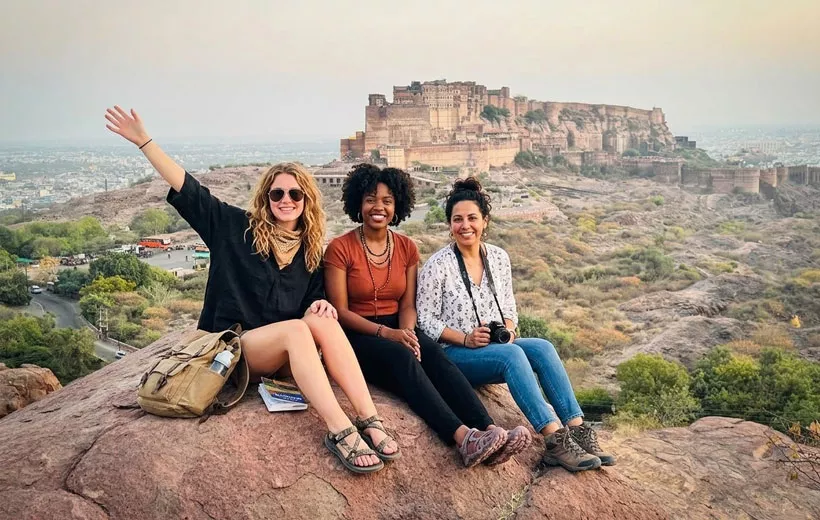
These are the practical things that experienced solo female travelers to India consistently point to as making the biggest difference on the ground.
| ✓ DO | ✗ DON’T |
|---|---|
| Save India’s emergency number 112 in your phone before you travel. | Don’t wander alone at night or down dark, unfamiliar alleys. |
| Be firm and loud when you need to say no. Confidence is your best tool. | Don’t accept food or drinks from strangers, however friendly they seem. |
| Carry headphones or a book they are a natural signal that you do not want to be disturbed. | Don’t smoke outside temples, religious sites, or in rural villages. |
| Share your location or travel plans with someone you trust each day. | Don’t make sustained eye contact with strangers staring at you it can be misread as interest. |
| Dress modestly, especially in rural areas and religious sites. | Don’t go to isolated or deserted areas alone, particularly after dark. |
| Use reputable, app-based cabs like Uber or Ola for city travel. | Don’t get into a taxi that has more than one person already inside. |
| Keep your hotel or guesthouse contact number handy at all times. | Don’t share your accommodation details with strangers you have just met. |
India has hundreds of incredible places to explore, and most of them are accessible and enjoyable for solo female travelers with the right preparation. Some cities and regions tend to feel more open and welcoming than others.
Mumbai
One of India’s most cosmopolitan cities. Mumbai has a large, diverse population, a strong international traveler presence, and a relatively open social culture. Solo female travelers generally feel comfortable here. The city is well-connected, has good transport options, and has plenty of safe, internationally reviewed accommodation.
Delhi
Delhi requires a bit more awareness than Mumbai but is absolutely manageable. The South Delhi neighborhoods Hauz Khas, Saket, Connaught Place tend to feel safer and more comfortable for solo women. As a gateway to the Golden Triangle, Delhi is also a very practical starting point for a wider India trip.
Goa
Goa is one of the most relaxed destinations in India for solo female travelers. The strong international tourist presence, beach culture, and relatively open social environment make it a comfortable place to travel alone. North Goa is livelier with more nightlife, while South Goa is quieter and more private both work well for solo women.
Jaipur
Jaipur is one of India’s most visited cities and has a well-developed tourism infrastructure. As part of the Golden Triangle, it sees a large number of international solo travelers. The city’s luxury heritage hotels and reputable tour operators make it very accessible for solo women who want a curated, private experience.
Bengaluru
India’s technology capital is one of its most cosmopolitan cities. The young, educated population and strong international presence make Bengaluru one of the more progressive and comfortable cities for solo female travelers.
Kerala
Kerala is widely considered one of the safest states in India for women travelers. The backwaters, hill stations, Ayurvedic retreats, and coastal towns all attract a thoughtful, respectful tourism crowd. Solo female travelers consistently rate Kerala as one of their most positive India experiences.
Pondicherry
Pondicherry’s French Quarter, boutique hotels, café culture, and relaxed atmosphere make it a wonderful destination for solo women who enjoy slow travel. It is calm, walkable, and has a notably open and tolerant social environment compared to many other Indian cities.
Wherever you travel in India, using a private car and driver for intercity journeys significantly improves safety, comfort, and peace of mind. Having a trusted driver who knows the route, speaks basic English, and is available throughout the day removes many of the logistical challenges that solo travel can bring.
Yes, with the right preparation. Thousands of women travel solo through India every year and have wonderful experiences. Being aware of your surroundings, dressing modestly, using reputable transport, and staying in trusted accommodation makes a significant difference to how safe and comfortable your trip feels.
Mumbai, Goa, Kerala, and Pondicherry are consistently rated as the most comfortable regions for solo women. The Golden Triangle — Delhi, Agra, and Jaipur — is also very accessible when traveled with a private driver and reputable accommodation.
Loose, modest clothing works best. Long trousers, long skirts, and shirts that cover the shoulders are ideal. A salwar kameez — the traditional Indian tunic and trousers — is comfortable, affordable, and one of the best things you can wear, especially outside major cities.
The all-in-one emergency number in India is 112. Save it in your phone before you travel. It connects you to police, ambulance, and fire services.
For intercity travel and multi-day journeys, a private driver booked through a reputable agency is far safer and more comfortable. You always know who is driving you, have their contact details, and your agency is available if you need support. Public transport works well for shorter city trips but requires more awareness and planning.
Yes. Uber and Ola are reliable and widely used by solo female travelers in Indian cities. Both apps show driver details and car registration, and have built-in trip sharing. Always verify the driver and car before getting in, and make sure no one else is in the vehicle.
October to March is the most comfortable time to travel across most of India. The weather is cooler and more pleasant, and this period coincides with many of India’s best festivals and cultural events. Avoid peak summer months (April to June) when temperatures can be extreme.
Private Driver India Tour, founded in 2006 by Mr. Amit Singh, is dedicated to providing unforgettable travel experiences in North India, led by professional drivers with years of expertise serving global travelers.
More About Us© Private Driver India Tour 2024-26 | All rights reserved.