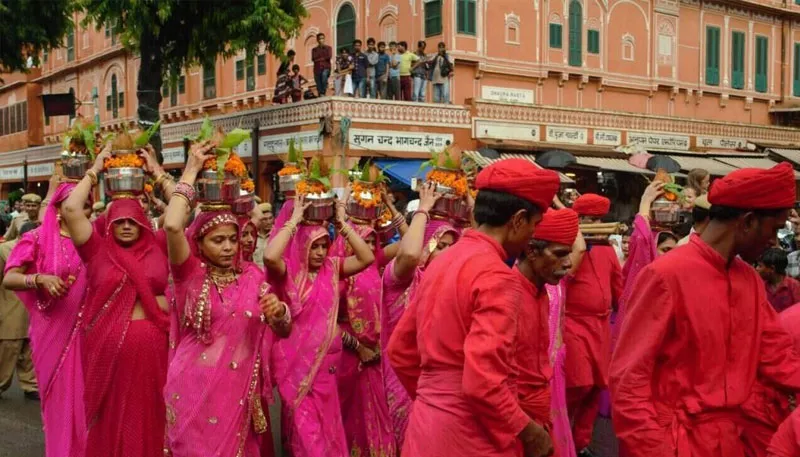

The Hariyali Teej Festival 2026 falls on Saturday, 15 August 2026 and is one of the most colourful and widely celebrated festivals in Rajasthan. The name Hariyali means greenery, and the festival is timed to welcome the monsoon season in the month of Sawan, when Rajasthan turns unusually lush and green after the dry summer months.
Teej is primarily a women’s festival. Married women observe prayers and fasting dedicated to Goddess Parvati, seeking blessings for the long and healthy life of their husbands. Unmarried women also take part, praying for happiness and a good life ahead. Green is the defining colour of the festival — worn in sarees, dupattas, and jewellery — and two special sweets, Ghewar and Fini, are prepared only at this time of year and shared among family and friends.
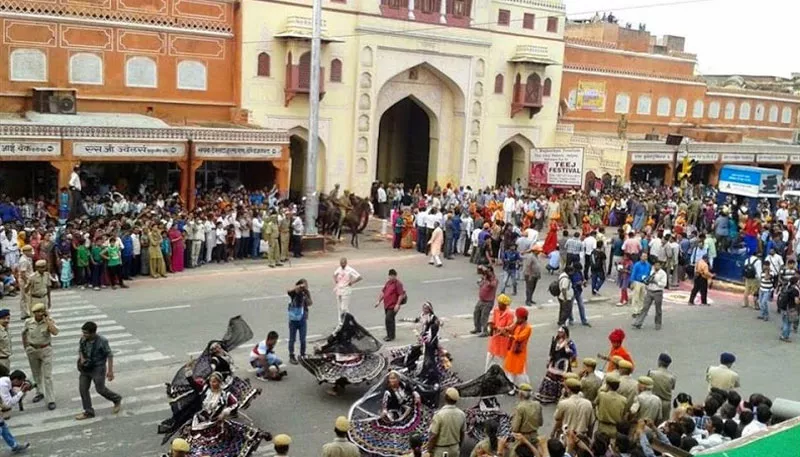
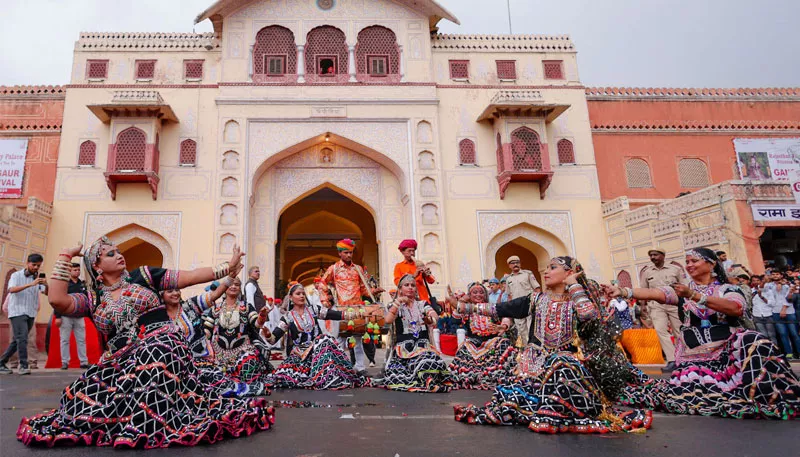
This Golden Triangle Tour with Teej Festival is designed for travellers who want to go beyond sightseeing and actually experience one of Rajasthan’s most joyful occasions. You visit Delhi, Agra, and Jaipur at a comfortable pace, and on the festival day in Jaipur you join a local family celebration and watch the famous Teej Sawari procession move through the city with decorated elephants, camels, folk dancers, and music.
Note: We book comfortable 3-star hotels in prime locations across Delhi, Agra, and Jaipur – clean rooms, breakfast included, and well-placed for the Teej Festival sightseeing route.
Want 4-star or 5-star luxury stays? Easy upgrade! Add Heritage Palace Hotels or premium properties for a more royal Rajasthan experience. WhatsApp now or fill the contact us form – get photos, rates, and confirmed availability instantly.
Your 3-Star Hotels Included:
Hotels confirmed at booking based on availability. Equivalent or better always provided.
Note: If you are travelling in a group of more than 4 passengers or wish to celebrate the Teej Festival in extra comfort, this tour can be fully customised with upgraded heritage hotels and larger vehicle arrangements available on request.
You land at Delhi airport and a driver meets you at the exit. Transfer to your hotel, check in, and the rest of the day is yours. No sightseeing today — that is intentional. India hits you fast when you land and the best first day is a free one. If you feel like stepping out in the evening, even a short walk around the hotel area gives you a good first impression of the city. Overnight in Delhi.
After breakfast, a full day in Delhi covering the city’s major landmarks with your private car and driver. Start at Raj Ghat, the simple black marble memorial to Mahatma Gandhi in a quiet garden. A calm beginning before the busier stops. India Gate next — the large red sandstone memorial arch at the centre of New Delhi, built to honour soldiers who died in the First World War.
Into Old Delhi for the Red Fort, Shah Jahan’s massive sandstone fortress where Mughal emperors lived for two centuries. Then Jama Masjid, one of the largest mosques in India, built in alternating red and white stone. The view from the minaret over Old Delhi’s rooftops is one of the city’s best.
Lotus Temple in the afternoon, the modern flower-shaped Bahai house of worship open to everyone. Then Qutub Minar, the 12th-century tower surrounded by ruins of even older structures — the point where Delhi’s long history really begins.
End the day with a walk through Chandni Chowk. Narrow lanes, street food, spice shops, cycle rickshaws. Very Delhi, very worth it.
Return to hotel. Overnight in Delhi.
Morning departure after breakfast. Around three and a half to four hours by road to Agra on the Yamuna Expressway.
Check in on arrival, short rest, then out for the afternoon sightseeing. Agra Fort first — a massive complex along the Yamuna River with palaces, audience halls and mosques. The detail most visitors remember is the room where Shah Jahan was imprisoned by his own son Aurangzeb. From that room, he could see the Taj Mahal across the river and reportedly spent his final years looking at it. That single detail makes the fort worth visiting.
Itimad-ud-Daulah, the Baby Taj — smaller, quieter, and in many ways more refined than the Taj Mahal in its inlay stonework. Give it proper time.
Mehtab Bagh in the late afternoon — the garden on the opposite bank of the Yamuna with a clear, unobstructed view of the Taj Mahal in the soft evening light. Dinner and overnight in Agra.
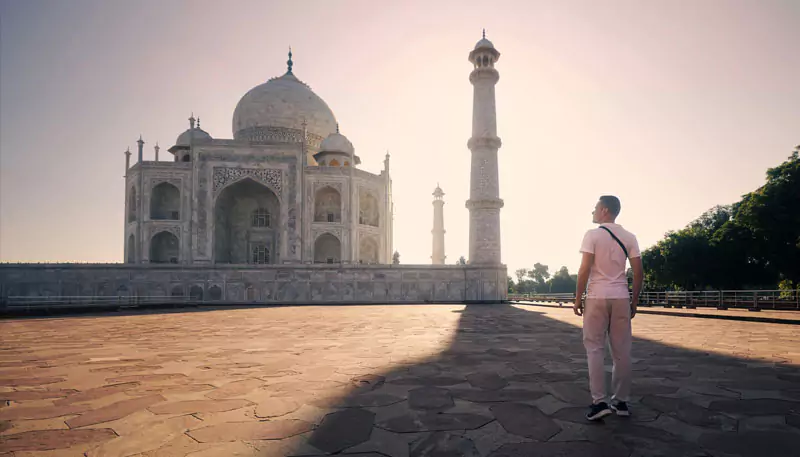
Early morning at the Taj Mahal at sunrise. The marble catches the first light differently from any other time of day. Arrive before the crowds.
After breakfast, drive to Jaipur with a stop at Fatehpur Sikri. Akbar built this city in the 1570s and made it the Mughal capital. It was abandoned around 14 years later when the water supply failed. The entire complex — palaces, mosque, audience halls, private courtyards – is preserved almost fully in red sandstone. The Buland Darwaza gateway is enormous. The Tomb of Salim Chishti in carved white marble with delicate jaali screens is beautiful. The Jodha Bai Palace blends Rajput and Mughal styles in a way you do not see elsewhere.
Arrive in Jaipur by evening. Short walk through the old city market. Overnight in Jaipur.
Full day in Jaipur. Start before 9am. Amber Fort first, on the rocky hill above Maota Lake. Arrive early for the views and smaller crowds. The Sheesh Mahal inside is the standout room — ceiling and walls covered in mirror work, built so candlelight would reflect in thousands of directions.
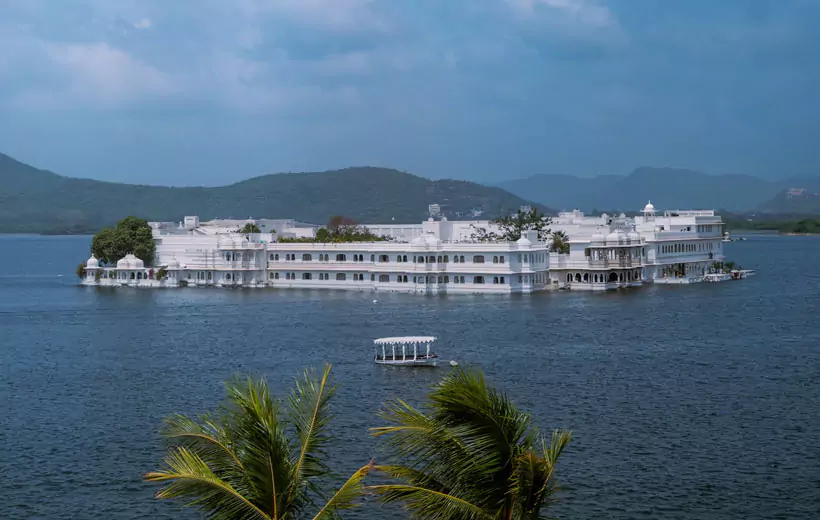
Photo stop at Jal Mahal, the island palace in the lake with the Aravalli hills behind it.
City Palace in the heart of the old city — part museum, part active royal residence. Good collection of royal costumes, weapons, and manuscripts.
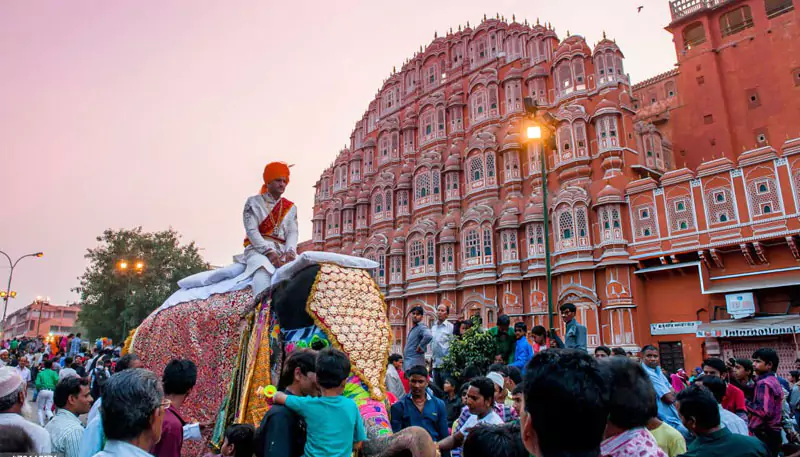
Hawa Mahal best seen from the tea shops directly opposite it. The five-storey facade of 953 small windows was designed so royal women could watch street life without being seen.
Jantar Mantar to close the sightseeing. The 18th-century open-air stone observatory still works. Most visitors rush through it — take your time.
Evening in Jaipur’s bazaars. Good for Rajasthani textiles, silver jewellery, blue pottery, and green Teej bangles if you want to join the festival properly tomorrow. Overnight in Jaipur.
The day the whole tour is planned around.
Morning — visit to a local Jaipur family home for the Teej celebrations. You sit with the women of the family and get mehendi applied. You help prepare Ghewar and Fini, the traditional sweets made only at Teej time. You join the pooja offered to Goddess Parvati. It is a real family home on one of their biggest festival days, not a performance. Warm, personal, and unlike most things you can do as a visitor in India.
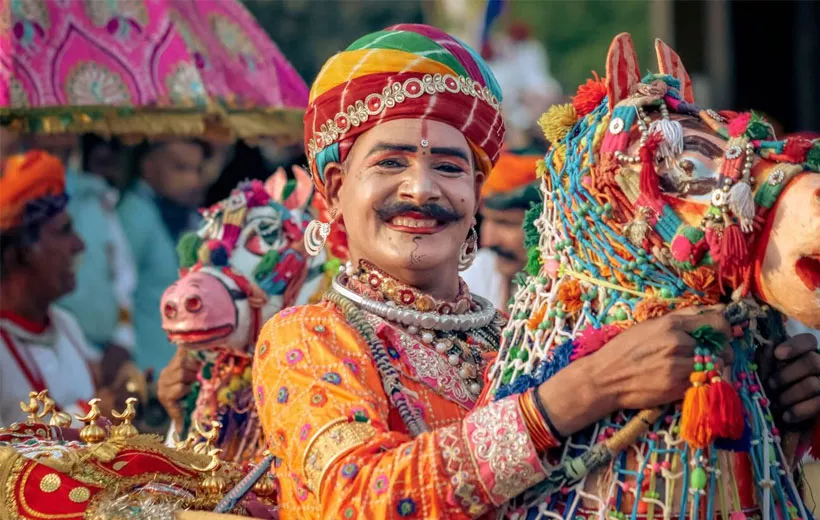
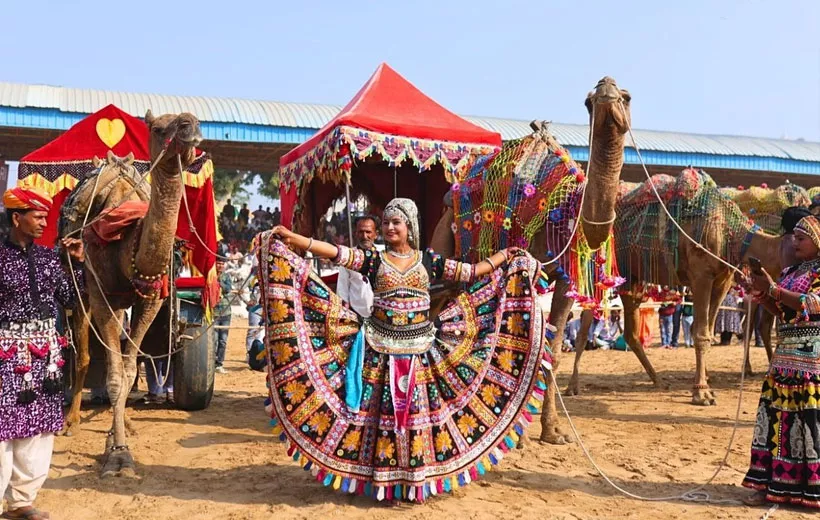
Later in the day, the Teej Sawari procession moves through Jaipur. Decorated elephants, camels, folk dancers in bright colours, musicians playing traditional instruments, and thousands of people lining the roads and rooftops. The whole city comes out. Green is everywhere — in clothes, in decorations, in market stalls. Return to hotel after the celebrations. Overnight in Jaipur.
After breakfast, check out and drive to Delhi for your onward flight. Around five to six hours by road. Your driver ensures you reach the airport in good time.
Hariyali Teej is a monsoon festival in Rajasthan dedicated to Goddess Parvati, observed primarily by women. In Jaipur, the festival is marked by a large public procession called the Teej Sawari, with elephants, camels, and folk performers, and by household celebrations that visitors can join. It is one of the most personal and genuine festival experiences available to tourists in North India.
Hariyali Teej 2026 falls on Saturday, 15 August 2026.
August is monsoon season. Temperatures are lower than in summer, the landscape is unusually green, and tourist crowds are smaller. Rain showers are possible, mostly in the evenings. Sightseeing during the day is generally fine.
You visit a real local family and join in the actual Teej celebrations — mehendi, cooking traditional Teej sweets, and participating in the pooja. It is not staged for tourists. The family genuinely celebrates Teej and welcomes you into it.
Yes, fully. Extra nights, different hotel levels, additional stops and any other preferences can all be adjusted. Get in touch with your dates and we will prepare a personalised itinerary.
Private air-conditioned car and driver for all transfers and sightseeing. Breakfast at all hotels. Tour guides at major monuments. All fuel, tolls, and applicable taxes. The local Teej family experience is arranged as part of the Day 6 program.
Yes. Teej is a women-centred festival and solo female travellers often find the home visit experience the most meaningful part of the trip. The tour uses a private car throughout and hotels are pre-selected for comfort and safety.
Yes, we require a 30% to 50% secure advance payment via UPI, bank transfer, or IMPS to confirm your booking, with the remaining balance payable at 25% payment on arrival and 25% payment before the end.
You can cancel free of charge up to 15 days before arrival. Cancellations made 7 days before arrival will incur a 50% charge, and cancellations within 48 hours of the tour start date are non-refundable.
We are here to help you with any inquiries regarding our services. Whether you need more details about our tour packages, want to book a trip, or have specific travel requirements, feel free to reach out to us.
Email: info@privatedriverindiatour.com
Phone: +91-9810368671
24/7 Our team is available to assist you. We look forward to helping you plan your perfect journey!

Private Driver India Tour, founded in 2006 by Mr. Amit Singh, is dedicated to providing unforgettable travel experiences in North India, led by professional drivers with years of expertise serving global travelers.
More About Us© Private Driver India Tour 2024-26 | All rights reserved.