



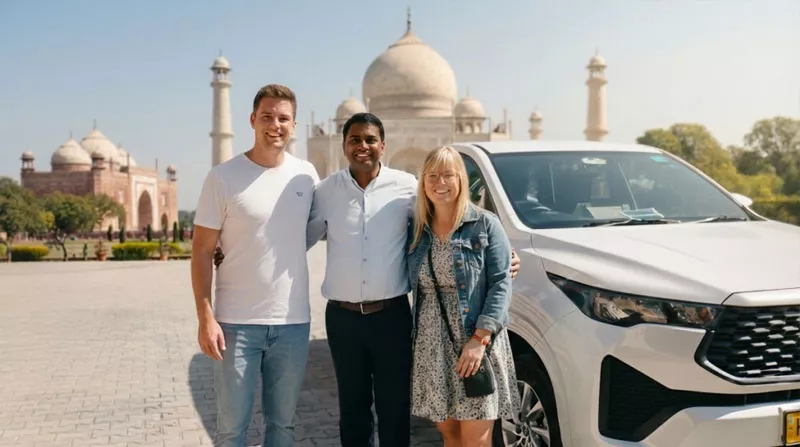
A one week India tour with a private driver offers one of the most relaxed and flexible ways to experience the country, especially for first‑time visitors who feel unsure about trains, buses, or self‑driving in a new environment. Travelling with a private car and driver allows visitors to cover several cities in a short time, avoid the stress of navigation, and enjoy local insights along the way. The classic one week route focuses on North India, often built around the Golden Triangle of Delhi, Agra, and Jaipur, with a private driver handling all transfers and day‑to‑day logistics.
This report outlines why an India tour with driver works so well, how a typical seven‑day itinerary flows, what it actually feels like on the road, how to choose the right car and company, and what travellers can expect to pay. It draws on 2025–2026 guides from established tour operators and travel companies that specialise in private driver itineraries.
Traffic in Indian cities and on highways can feel hectic for visitors who are new to local driving styles, road rules, and languages. A private driver removes the need to interpret signs, negotiate with taxi drivers, or manage unfamiliar roads after long‑haul flights. Reputable companies supply licensed drivers, insured vehicles, and 24/7 support, which reduces the risk of getting stranded if something goes wrong.
Most private cars used for touring are air‑conditioned, which matters on hot days and during long highway stretches. Travellers can relax in the back seat, adjust their own pace, and take breaks whenever they need them. Operators highlight this combination of safety and comfort as a key reason they recommend private drivers over self‑drive car rentals for foreign visitors.
Unlike fixed coach tours or rigid train timetables, an India private car and driver arrangement allows changes on the go within the agreed route and time frame. Travellers can add short stops at viewpoints, villages, stepwells, or roadside cafes that catch their eye. They can also adjust start times to catch sunrise at landmarks like the Taj Mahal or to avoid midday heat in desert cities.
Many drivers act as informal local guides, suggesting clean restaurants, reliable washroom stops, photo spots, and lesser‑known attractions along the road. This guidance helps first‑time visitors avoid common tourist traps, including overpriced souvenir shops or poorly maintained roadside facilities.
India is large, and even a focused itinerary can involve substantial distances. Well‑planned road routes between major tourist centres, however, use national highways that are in good condition and offer predictable drive times when handled by an experienced driver. For example, the Golden Triangle route connects Delhi, Agra, and Jaipur by smooth expressways and highways, enabling three city stays in a single week without feeling constantly rushed.
A private driver picks travellers up from airports, hotels, and railway stations directly, cutting out the time spent organising last‑minute transfers or haggling with local taxis. This point‑to‑point convenience becomes particularly valuable when visitors have only one week and want to see as much as possible.
Travel providers that specialise in private driver tours recognise one week as a realistic starting point for a first visit to India, especially for travellers focusing on North India’s main cultural highlights. Seven days allow at least two nights in each of three major cities, usually Delhi, Agra, and Jaipur, with time for guided sightseeing as well as relaxed evenings.
Guides that present 7‑day Golden Triangle itineraries emphasise that five days is the minimum most people feel comfortable with, while seven days allows a gentler pace and room for additional experiences such as village detours or extended market exploration. A private driver makes this week‑long plan smoother by ensuring timely departures, efficient highway journeys, and reliable drop‑offs at each hotel.
For a one week India tour with private car and driver, the most common route is the Golden Triangle:
This loop offers a compact blend of Mughal monuments, the Taj Mahal, Rajput forts, and colourful bazaars with manageable driving distances. Some 10‑day private driver itineraries extend this base by adding cities like Jodhpur, Udaipur, Khajuraho, or Varanasi, but those usually go beyond a strict 7‑day window.
Within seven days, the focus remains on doing fewer places well rather than trying to cross multiple regions. A private driver enables richer experiences in each city by streamlining transport rather than increasing the number of destinations.
Most visitors land in Delhi, where a private driver meets them at the airport with a placard and drives them directly to their hotel. Day 1 usually stays light to account for jet lag and travel fatigue. Some itineraries suggest a gentle evening drive around India Gate and the government buildings, with a simple dinner at a clean restaurant recommended by the driver.
This first evening sets the tone: the driver handles traffic and navigation while travellers sit back and get their first impression of India from the comfort of an air‑conditioned car.
On the second day, travellers typically explore both Old and New Delhi, often with a local city guide while the driver manages all transfers. Common highlights include:
The private driver collects travellers from each site, keeps valuables safe in the locked car, and waits at pre‑arranged pick‑up points so that visitors never need to negotiate street taxis or auto‑rickshaws if they do not want to.
On Day 3, the tour usually leaves Delhi after breakfast, heading to Agra via the Yamuna Expressway, a smooth controlled‑access road that connects the two cities in around three to four hours of driving time. The driver often suggests a clean highway service area for tea, coffee, snacks, and washrooms, which first‑time visitors appreciate.
Upon arrival in Agra, many itineraries either allow a relaxed afternoon by the hotel pool or include a sunset visit to Mehtab Bagh for a view of the Taj Mahal from across the river. The driver ensures luggage is safely stored at the hotel and then waits nearby until the sightseeing portion of the day ends.
Day 4 usually begins early with a sunrise visit to the Taj Mahal to avoid crowds and strong midday sunlight. The driver arranges an early hotel pick‑up, drops travellers near the monument entrance, and coordinates the return time.
Later in the morning, visitors explore Agra Fort and sometimes Itmad‑ud‑Daulah, often called the “Baby Taj.” Between sights, the driver navigates through Agra’s streets, finds parking, and recommends reputable local restaurants for lunch, saving travellers from guesswork.
On Day 5, the journey continues from Agra to Jaipur, commonly with a major stop at Fatehpur Sikri, the former Mughal capital known for its red sandstone palaces and mosque complex. Some itineraries also add Abhaneri Stepwell as an extra stop, depending on timing and interests.
The drive from Agra to Jaipur usually takes about five hours including sightseeing and brief rest breaks. A private driver coordinates departure time to balance monument visits with arrival in Jaipur before evening, ensuring a smoother check‑in at the hotel.
Day 6 focuses on Jaipur, the “Pink City,” and often includes:
Jaipur’s attractions sit in different parts of the city, and local traffic can be dense. The private driver threads the car through these zones, drops travellers close to entrance gates, and collects them again at agreed spots, which reduces both walking distances and logistics stress.
In the evening, many travellers choose to browse handicraft markets or dine at rooftop restaurants recommended by their driver, who often knows which venues combine good food with reliable hygiene standards.
On the last day, the driver takes travellers back from Jaipur to Delhi, usually a journey of around five to six hours depending on traffic and refreshment stops. Some itineraries allow for a final chai break at a roadside viewpoint or a short market stop on the outskirts before reaching the airport.
By this point, travellers often feel comfortable enough with their driver to treat the last drive as a reflective moment, talking through highlights of the week and asking final questions about Indian culture, food, or future routes they might explore.
A typical travel day on a one week India tour with driver starts after breakfast when the driver meets travellers at the hotel lobby, carries their bags to the car, and confirms the day’s plan and expected drive times. The car, usually a sedan or SUV with air‑conditioning, has chilled water bottles, tissues, and sometimes Wi‑Fi or charging points depending on the operator.
Once on the road, travellers watch everyday Indian life unfold outside: roadside tea stalls, fields, trucks painted with colourful slogans, and small towns. The driver handles toll booths, fuel stops, and traffic police checks while guests stay in the back seat and enjoy the scenery. When a clean rest stop appears, the driver pulls over and points out the best place for washrooms and snacks based on prior experience.
Sightseeing days inside cities involve shorter hops between landmarks. The driver drops travellers as close as possible to monument entrances and waits in the parking area until they return. This continuity makes the experience feel more personal than using random taxis at each stop and adds a sense of safety, especially for solo travellers and older visitors.
When booking an India tour with driver, travellers usually choose between sedans, SUVs, and larger Tempo Travellers, depending on group size and luggage.
Tour companies that promote India tour by car and driver often list starting prices and recommended group sizes for each vehicle category, helping visitors compare options before booking.
For a one week India tour with private car and driver, most couples and small families opt for a sedan or SUV on the Golden Triangle route. Sedans handle city traffic and parking easily, while SUVs provide more comfort on longer stretches and rougher patches.
Larger family groups, multi‑generation trips, and small corporate teams frequently book Tempo Travellers so that everyone stays in the same vehicle and can share stories, music, and snacks during drives. The private driver manages entry and exit at each stop, ensuring that the group moves together and no one gets left behind.
Cost depends on the route, vehicle type, season, and inclusions, but several travel companies publish indicative figures for car‑and‑driver‑only packages.
A Golden Triangle tour with private driver often uses pricing based on a fixed daily rate that covers the car, driver, fuel, tolls, and parking. A 2025–2026 cost guide for India private drivers notes typical per‑day rates such as:
These figures usually exclude hotels, meals, and entrance tickets, which travellers book separately or add through a tour operator.
For a one week India tour with driver in the Golden Triangle, a couple using a sedan might expect the car‑and‑driver component to land in the region of a few hundred dollars in total, while a family in an SUV pays somewhat more. Groups sharing a Tempo Traveller may pay the highest absolute amount for the vehicle but enjoy lower per‑person costs.
Private driver cost guides emphasise the importance of confirming whether the quoted price includes fuel, tolls, state taxes, parking, and driver accommodation, because some operators advertise low base rates and then add hidden charges later. Transparent companies itemise everything upfront so travellers can compare real totals.
Travel advice sites and specialised tour operators describe several safe ways to book a private tour with driver in India:
These channels help travellers avoid unvetted taxi drivers who approach them at airports or railway stations with offers of long‑distance trips.
Guides that explain how to book a trustworthy private driver in India highlight several key traits:
Many drivers go beyond simple transport by offering small conveniences such as water, tissues, help with local SIM cards, and tips on how to navigate markets or tipping customs.
Before confirming a one week India tour with private car and driver, travellers can look for recent, detailed reviews that mention the driver’s name, driving style, cleanliness of the car, and responsiveness of the company. Longform feedback that describes entire multi‑day trips often provides more reassurance than short, generic comments.
Private driver cost and booking guides stress the value of written agreements that outline the itinerary, number of days, inclusions, and cancellation terms to avoid misunderstandings later.
Most established routes used for private driver tours, such as the Golden Triangle and popular Rajasthan circuits, run along national highways with regular services, fuel stations, and rest stops. Safety advice focuses less on road conditions and more on choosing licensed drivers, avoiding unregistered taxis, and agreeing on plans in advance.
Travellers are encouraged to save the company’s 24/7 helpline, share itineraries and live locations with family or friends, and keep passports and valuables securely stored in hotel safes when possible rather than in the car.
Spending several hours a day in a car can feel tiring if travellers do not take sensible breaks. Private driver itineraries recommend stopping every two to three hours for stretching, hydration, and washroom visits. Lightweight clothing, sunscreen, hats, and reusable water bottles help visitors cope with India’s varied climate.
Drivers can often point out restaurants that cater well to international visitors and maintain good hygiene standards. Travellers who want to try street food can ask their driver which places enjoy a strong local reputation rather than choosing purely at random.
Private drivers usually understand that guests come from many cultures, so they tend to keep interactions respectful and practical, while being open to conversation if travellers initiate it. Simple courtesies such as greeting the driver each morning, listening to their safety advice, and avoiding last‑minute major itinerary changes without discussion help build a positive relationship.
Guides suggest modest dress for visits to temples, mosques, and some historic sites, as well as sensitivity when photographing people in markets or villages. Drivers can often advise when photography is appropriate and when it is better to ask permission.
Travellers planning a one week India tour with driver sometimes make avoidable errors, which experienced companies highlight in their advice:
Avoiding these mistakes leads to smoother trips and fewer surprises once the tour begins.
Private driver itineraries work particularly well for:
For these travellers, a one week India tour with private car and driver strikes a balance between structure and freedom: the route and logistics are handled professionally, yet each day still offers choices in terms of sightseeing pace, food, and unplanned photo stops.
A one week India tour with private driver provides a practical, comfortable, and experience‑rich way to explore the country, particularly along the well‑known Golden Triangle route of Delhi, Agra, and Jaipur. Travellers benefit from safe, air‑conditioned transport, flexible routing, and local knowledge, all while avoiding the stress of self‑driving or assembling multiple separate transfers.
By choosing a reputable company, matching the vehicle type to group size, confirming inclusions upfront, and adopting a realistic seven‑day plan, visitors can turn a short holiday into a memorable journey that feels smooth from airport pickup to final drop‑off. This model of travel suits a wide range of guests, from solo explorers to families and small groups, and remains one of the most recommended ways to experience India in a single week.
Private Driver India Tour, founded in 2006 by Mr. Amit Singh, is dedicated to providing unforgettable travel experiences in North India, led by professional drivers with years of expertise serving global travelers.
More About Us© Private Driver India Tour 2024-26 | All rights reserved.